Thursday, January 11, 2007

ART AND COMPUTERS


A nifty computer image from the blog of Disney concept artist Todd Harris

In my last post, I mentioned that art originated in the paleolithic era after our ancestors discovered a type of rock that could be shaped into the first blades, flints and other tools that transformed human life. That special rock (cryptocrystalline siliceous) contained silica-- the same material that, 35,000 years later, we use to make semiconductors for computers. This fateful substance has now intervened twice in our history to alter human destiny.

For that reason alone, it seems to me that computer art-- produced with silicon chips-- has earned a little patience and an open mind.

Computer art has now been with us for over 50 years (if you include the pre-ASCII images created with early Baudot code) For most of that time, computer art has been simply awful.
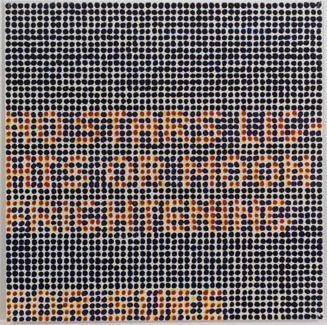


Jennifer Bartlett wowed the art establishment by using computers to convey platitudes on LEDs


A computer modified image of a nude


Computer generated Op Art


The fundamental problem with the computer as an artistic tool is that computers are exclusively a technology for binary information, but binary information is not often a major ingredient of great art. Most art doesn't need more information-- it needs more wisdom, judgment and taste. One of my favorite thinkers on this subject is the ever insightful Karrie Jacobs, who wote:
Computers have seduced us into thinking about ideas-- the intangible stuff that comprises our culture, our mental universe, our homegrown organic realities-- as information....With information technology, our reach is infinite but our grasp is weak.
Jacobs asserts that information should be our raw material, not our end product, and I agree with her. To the extent that computer art is finally getting interesting, it is where computers serve as a means to an end, and not the end itself. As with any new art tool, it takes time for artists to humanize and gain proficiency with computers (and to modify them to carry out the subtler instructions of the artist). But after fifty years, computers have become integrated into the conception, production and distribution phases of art. Some of this art is quite good. Some-- in my view-- is pretty bad.

Over the next few posts, I hope to engage in a dialogue with readers who know more than I do about computer art. Most of all, I am interested in how computers are changing the nature of the artistic process. Let's explore
.

IS ART A BYPRODUCT OF TECHNOLOGY?


At the earliest red dawn of humanity, our ancestors slowly learned to use stone tools. For more than 2 million years they used stones in the same way: to bash or chop. It was a brutish existence that left no traces of art or culture behind.

Then, during the upper paleolithic period (35,000 to 12,000 years ago) stone technology took a great leap forward. Our ancestors learned how to select certain rocks that could be shaped into blades-- longer and lighter with more cutting surface. Using these stones, they developed tool making techniques that gave them ten times the cutting edge from the same sized stone.

This transformed their world. They could now use sharpened rocks for spear points and projectiles. They could cut with greater precision and for the first time make use of antler, ivory and bone. Hunting became easier. Conceptual thinking became more important to survival. The first signs of symbolic thought emerged. It was in this environment that the very first art began to appear, painted on cave walls and etched in bone. More artistic progress was made in those 25,000 years than in the preceding 2 million years combined.

Since those fragile beginnings, art continued to flourish in tandem with technology.

For example, Beethoven was able to revolutionize music partially because the invention of the piano gave him greater range and expressive capability than previous composers who grew up using the harpsichord.

And illustration art only became a phenomenon in the late 19th century when printing and photographic technology improved enough to reproduce artwork vividly and accurately for mass produced books and magazines. Without half tone engraving, there would have been no golden age of illustration.

It is useful to remember this long history in an era when technology sometimes seems dehumanizing and oppressive. Technology may push aside traditional art forms such as drawing and painting in favor of strange new art forms that screech and light up and move. But even the most sentimental among us (and I may qualify for that category myself) need to remain open minded as we assess the impact of technology on art.

The reason for my long, boring digression is that I want to chat in the next few installments about the nature of computers and digital art. I would love to engage in a dialogue with you dear readers about the future of art, and to be educated by you as I invariably am.

Are you ready?

Wednesday, January 3, 2007

ARTISTS IN LOVE, part seven


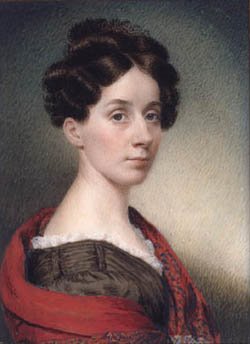
Sarah Goodridge (1788-1853) was born in a small village in Massachussetts, the sixth of nine children. Growing up in the country, she learned to draw by scratching pictures with a pin on birch bark. Eventually she made her way to Boston where she earned a living painting miniature portraits on ivory.


In the days before photography, such pictures were often worn in lockets or pinned to lapels.


Goodridge's miniatures were very popular and she soon flourished as an independent artist-- a rarity for a woman in colonial America. By painting two or three portraits a week, she made enough to support her sick mother, her orphan niece, and other family members. Her career lasted for thirty years until her failing eyesight forced her to stop. She never married.

Goodridge did, however, develop a special friendship with the handsome young Boston lawyer Daniel Webster. The first time she painted Webster's portrait, he was married with three children. He sat for eleven more portraits over the next 25 years. Webster and Goodridge wrote each other frequently; she carefully preserved letters from him, while he seems to have carefully destroyed letters from her. When he moved to Washington to serve in government she visited him there twice.

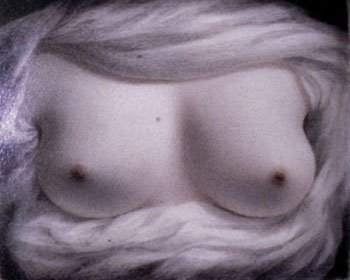
After Webster's wife died in 1827, Goodridge secretly painted this miniature for him entitled Beauty Revealed (self portrait):


Sarah's daring self-exposure was unthinkable in an era when modesty was rigidly preserved by several layers of clothing. Her painting crossed all kinds of boundaries-- social, sexual, religious, artistic and economic. John Updike describes this little jewel as "the first known nude American portrait done from life" that has survived.


No one can ever be certain what Webster and Goodridge shared in private. Scholars have agreed that at a minimum, Goodridge's poignant self-portrait communicates her availability to Webster (or, as Updike wrote, "we are yours for the taking.")


Could an object so small ever carry greater weight? Sarah's offering is not mere pigment on ivory. It shows how an artist invests a physical object with deep significance, and through that object reaches out to another human being. It reminds me of Walt Whitman's impassioned attempt to use a poem to reach beyond his mortality and touch some future reader who might be holding Leaves of Grass late at night:

Now lift me close to your face till I whisper,
What you are holding is in reality no book,
nor part of a book;
It is a man, flush'd and full-blooded -- it is I -- So long!
We must separate awhile --
Here! take from my lips this kiss;
Whoever you are, I give it especially to you;
Whatever their private relationship, Webster was politically ambitious and needed money, so Goodridge simply would not do for his second wife. He met and promptly married another woman, whose sole qualification seemed to be that she was from a wealthy and prominent family.

When Goodridge died, she left Webster her beloved paint box.


As for Webster, he kept her tiny painting hidden amongst his personal effects until the day he died. It was discovered by his heirs and was eventually sold off. This miraculous glimpse of a beating heart beneath the manners and undergarments of an earlier generation is now safely contained in an antiseptic museum showcase.


Sunday, December 31, 2006

About commission availability or personal news

Contact for info: michele.deadred (at) gmail.com

[updated February 2011]

If you have emailed me regarding possible commissions during this month (February) or earlier, I will still be available for work at the timeframe I have previously mentioned. I'm currently really busy until March. I'm always available for discussing commissions for a later date, of course :)

If any studio is hiring, I'm interested in full-time on-site work.

I'm a quiet and hardworking little geeky girl. I draw real nice, learn new skills fast, and I'd like to think I have a great sense of humor (penis jokes count, right?). I'm also able to move anywhere: I have no pets, no babies and no addictions.. well except for coffee :P If I can get caffeinated at your studio, I'm good to go!

Saturday, December 30, 2006

ONE LOVELY DRAWING, part nine

There is obviously no such thing as the single greatest drawing in the history of the world. It would be foolish to think about rating art that way.

However, if there was such a drawing...


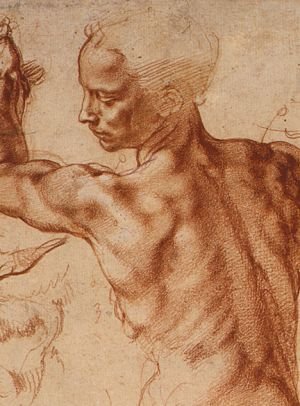
...it would probably be this one by Michelangelo. It is a preparatory drawing for Michelangelo's illustrations of the Bible for the Sistine Chapel.


I can't think of any object with more grace or beauty with which to end 2006.

This drawing is of the Libyan Sibyl who foretold "the coming of the day when that which is hidden shall be revealed." She had the power of prophecy because she was by birth half mortal and half divine: "An immortal nymph was my mother, my father an eater of corn."

I am just a lowly corn eater myself but I have enjoyed sharing these lovely images with you in 2006 and I wish all of you the happiest of new years.

Sunday, December 24, 2006

ADVICE FROM ARTISTS

I generally sympathize with Matisse's view that artists should cut their tongues out so they won't be tempted to explain their work. It may not show, but I do try on this blog to avoid adding to the sum total of BS written about art in the world.

Here are some comments about the artistic process from illustrators or other artists that I think are particularly insightful:

Don't stop to admire a partly completed sketch.
--Robert Fawcett

On always doing your best work: The argument that "it won't be appreciated anyway" may be true, but in the end this attitude does infinitely more harm to the artist than to his client.
--Robert Fawcett

On being accused of making art like a madman: There is only one difference between a madman and me. I'm not mad
--Salvador Dali

What one has most to strive for is to do the work with a great amount of labor and study in such a way that it may appear, however much it was labored, to have been done almost quickly and almost without any labor, and very easily, although it was not.
--Michelangelo

I ain't yet worked out whether I like girls because I like curvy lines or if I like curvy lines because I like girls.
-- some artist on the internet whose name I forgot to write down

On when to put the finishing touches on an illustration: The longer the idea can be considered in the abstract, the better.
--Robert Fawcett

There are moments when art attains almost to the dignity of manual labor.
-- Oscar Wilde

Saturday, December 2, 2006

A FEW SMART DRAWINGS

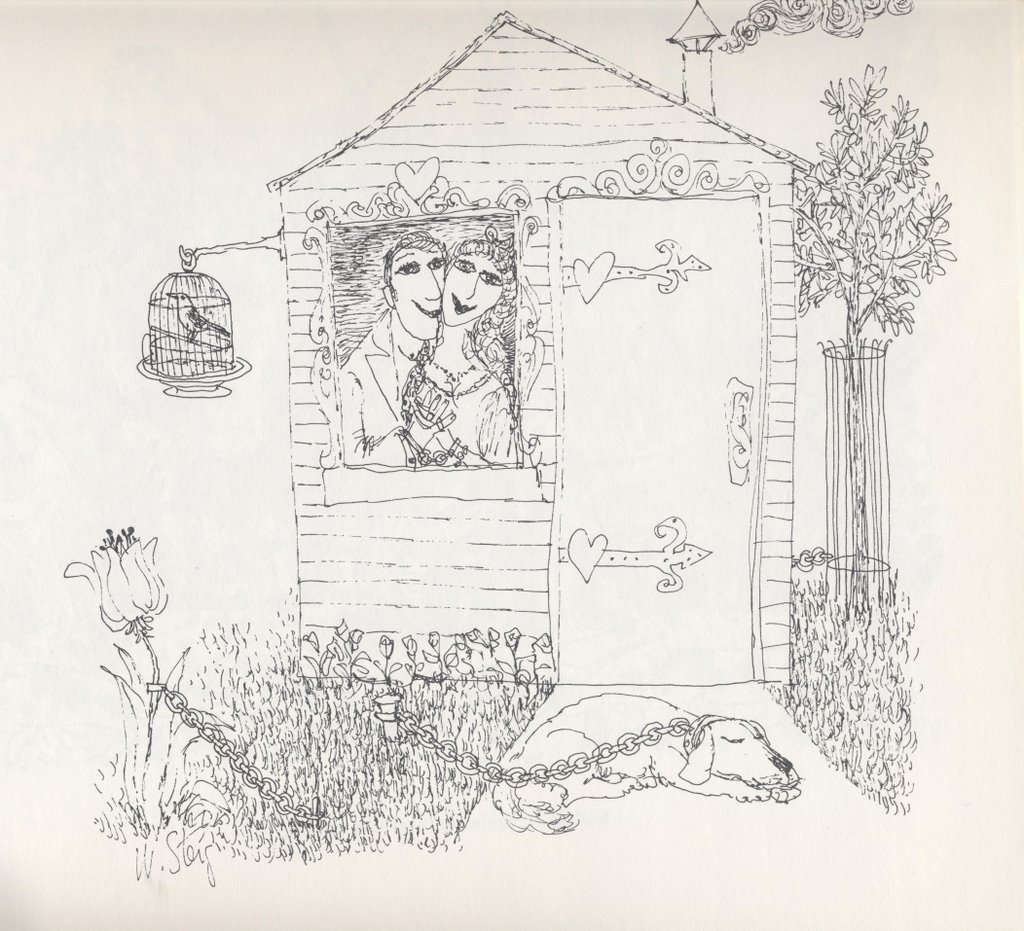
The illustrator Fred Ludekens said "drawing is thinking." Here are some wonderful examples of what makes visual thinking better than verbal thinking:


copyright The New Yorker

Images can convey complex thoughts with more immediacy, universality and ambiguity than words can offer.


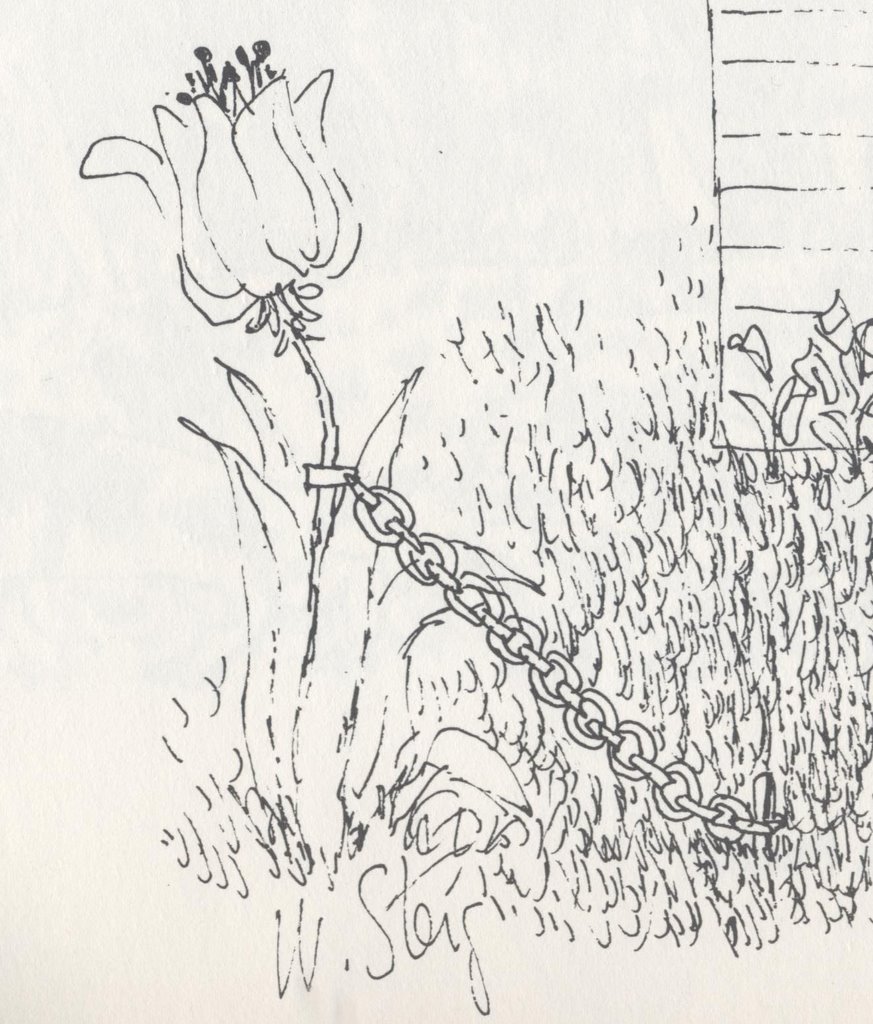
For example, William Steig's drawing above of the blissful young lovers in the cottage makes a wicked statement about the darker, proprietary side of bliss by chaining the flower in the front yard:


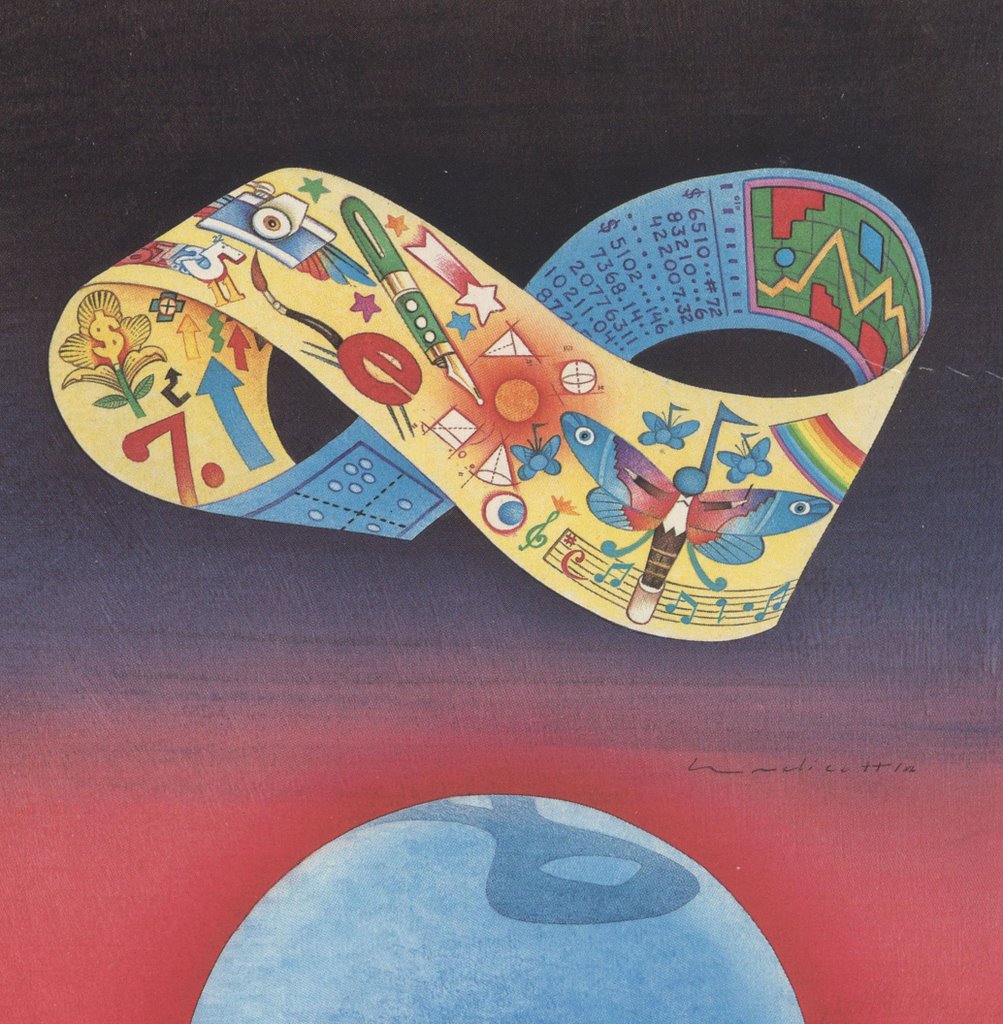
As another example, the Foote Cone & Belding drawing below shows that creativity and logic are two sides of the same phenomenon by placing them on opposite sides of a moebius strip-- which only has one side.


copyright Foote, Cone & Belding

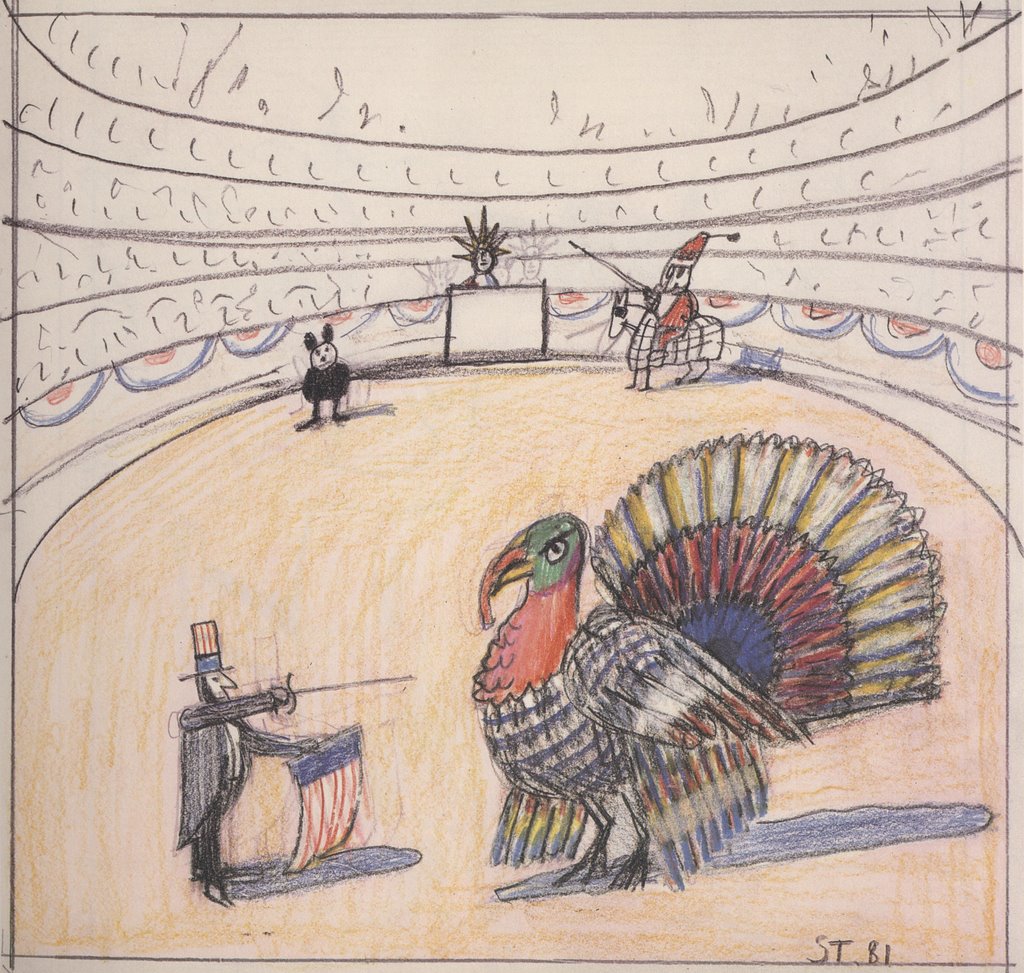
Next, the symbols chosen by the brilliant Saul Steinberg-- Uncle Sam facing off against a fatted Thanksgiving turkey in the bull ring, presided over by the statue of liberty and Santa Claus-- juxtapose categories rich with meaning in ways that words with definitions just can't.


copyright The Saul Steinberg Foundation/Artists Rights Society (ARS), NY

How many sentences would it take to explain such thoughts in words? Good visual ideas dance where words cannot go. More importantly, how many related ideas would you miss along the way if you were led to a conclusion by linear sentences, rather than by rolling these images around in your mind?

Some sequential artists and graphic novelists seem to think that intelligent drawings are merely drawings accompanied by word balloons containing intelligent words. For me, this view surrenders the real strength and potency of the visual medium.