Sunday, December 11, 2005

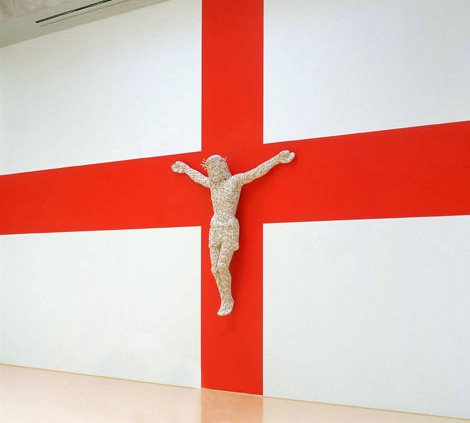
Human

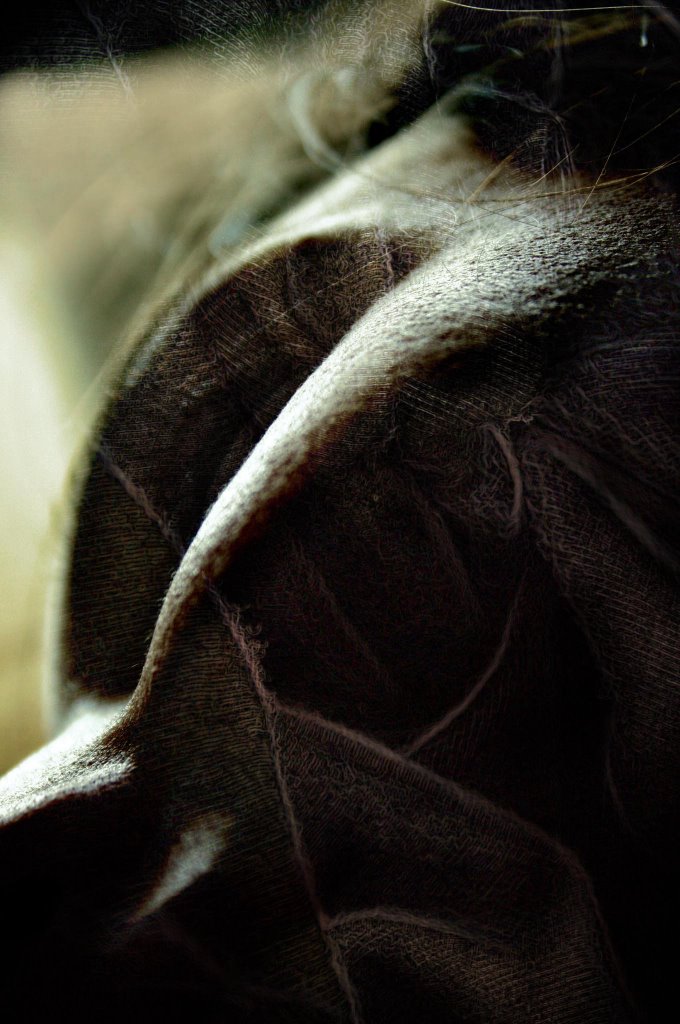
Photo by Francine Gagnon.

Does anyone say he is his body, period?

What is it that makes the body such a scandal? Is it because bodies we see are not our bodies? Is it this un-identity, the fact that empathy seems like a childish dream, some sort of ridiculous belief? Is it that touching is losing my own touch? Listen to Wittgenstein: The truth is: it makes sense to say about other people that they doubt whether I am in pain; but not to say it about myself.
So there is a basic egocentrism in our thinking about the body. In English, we say "take a walk in my shoes". Compare it to the Polish version: "put yourself into my skin". (Strange, how my skin seems to define me.) Is a racer without his car still a racer?
And that's where the fear of skin appears. And the obsession of skin. Its shapes, tones, actions.
How many skins can I have, how distant is this skin from mine, what can be done with this skin. Using it to re-create identity, as a toy, a scandal, or any other pretext. And we all do it - which is scary, and nice : feel the carress. It translates the other into what's yours.
And vice versa.

NB: Here is a short overview of body in contemporary art (in French)

Saturday, December 10, 2005

ARTHUR SZYK: PICTURES LIKE JEWELS


Medieval artists painted illuminated manuscripts by crushing precious stones such as lapis lazuli or malachite into their pigments and working with gold leaf. The result was radiant little miniature paintings, unsurpassed for color and intensity. In the 20th century, an illustrator named Arthur Szyk (1894-1951)carried on the tradition, creating lovely miniature paintings with exquisite skill.


Szyk painted on a tiny scale, with the precision of a watchmaker. For example, the original of the following portrait of Simon Bolivar is a mere 4.25" x 5.75":


Szyk was born in Poland and gained early fame as an illustrator. He mostly painted scenes from history and from the Bible. A gentle, diminutive, bookish man, he moved to America shortly before the outbreak of World War II. However, his 70 year old was mother was hauled away by the Nazis and murdered in a concentration camp. Szyk turned all of his talents to fighting fascism with his art. He created biting caricatures and political cartoons of the Nazis in books and magazines of the day. He was so effective that Hitler put a price on Szyk's head.


Szyk was tireless in his efforts against fascism on behalf of freedom, and became a patriotic American citizen in 1948, illuminating the Declaration of Independence and other American icons...


It is especially ironic then that a few years later, at the height of McCarthyism, the House Un-American Activities Committee began investigating Szyk who they suspected of being a member of an organization that they believed served as a "Communist front." The distraught Szyk protested that he was not connected with any Communist organization, but a few months after the investigation began he died of a heart attack at age 57.
Today there is an Arthur Szyk Society that focuses on Szyk's message of freedom, democracy and tolerance.

Monday, December 5, 2005

Surface

Untitled (2005)

Artistic residency


Mousonturm is organizing an artistic residency for its Plateaux Festival:

Plateaux is a supportive model for young performing artists.

Plateaux invites international artists, performers and companies in the field of experimental theatre, performance art and live art to send in conceptual proposals. The proposals should display a discrete and textually well founded aesthetic position.

Plateaux commissions a limited number of productions and invites the artists for production residencies. The artists can carry out their respective projects at Künstlerhaus MOUSONTURM in Frankfurt/Main or at one of the co-producing institutions. The productions will then be presented at the Künstlerhaus MOUSONTURM during the Plateaux festival in October 2006.

Plateaux deadline
JANUARY 14 2006 (Postmark)


Sunday, December 4, 2005

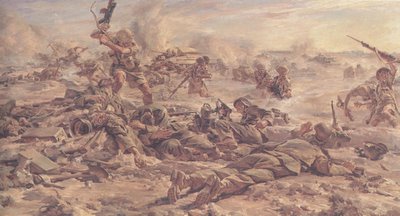
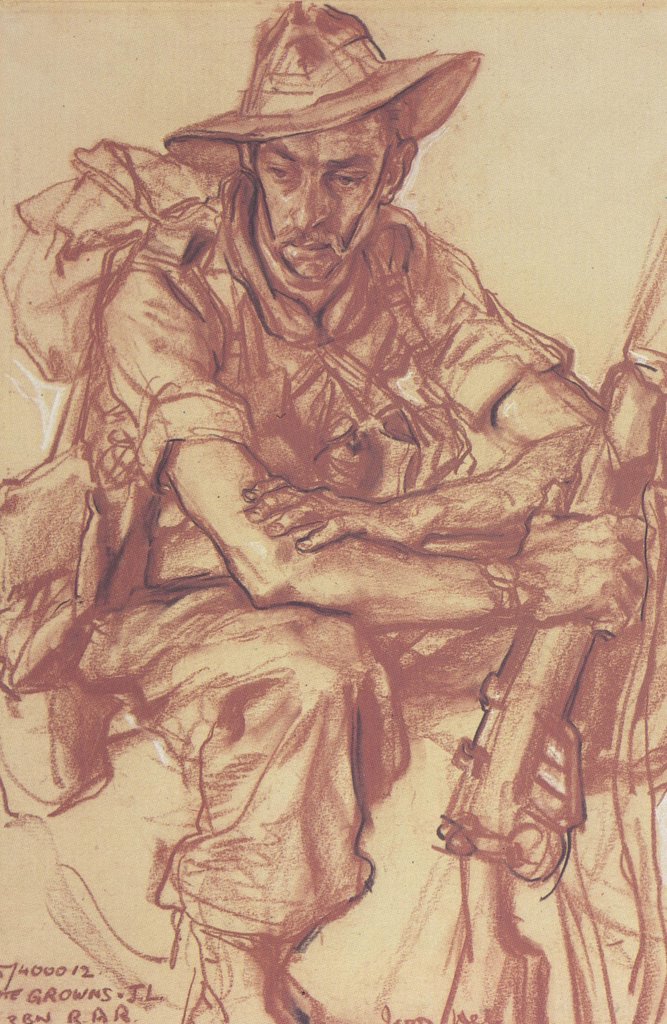
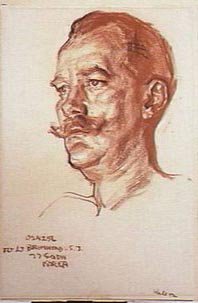
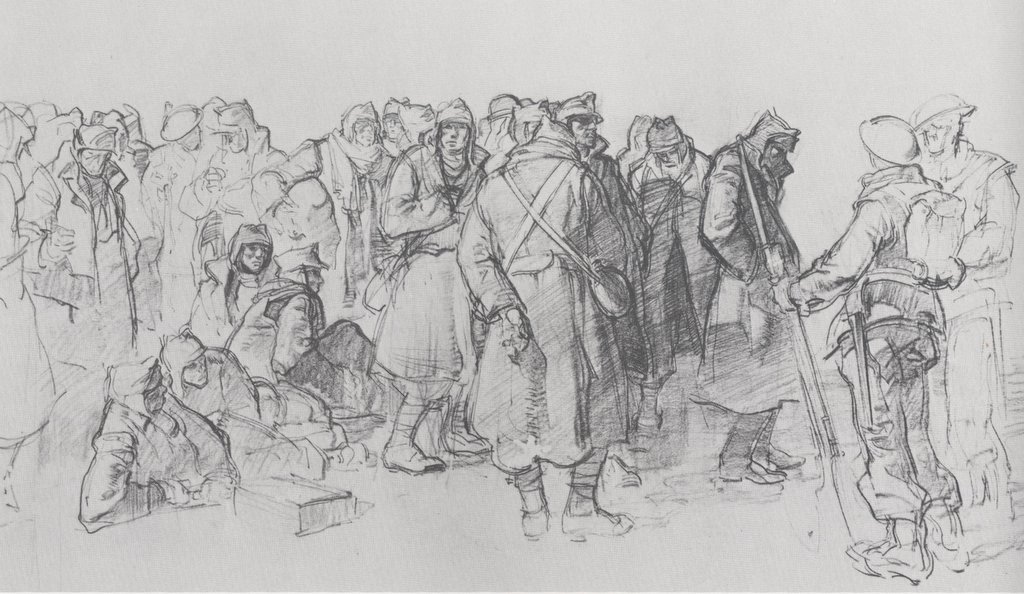
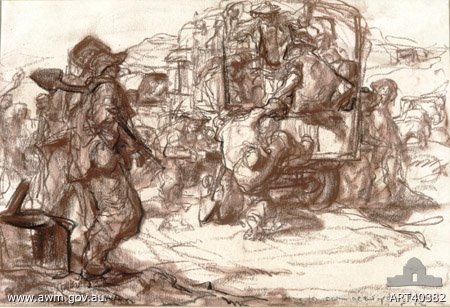
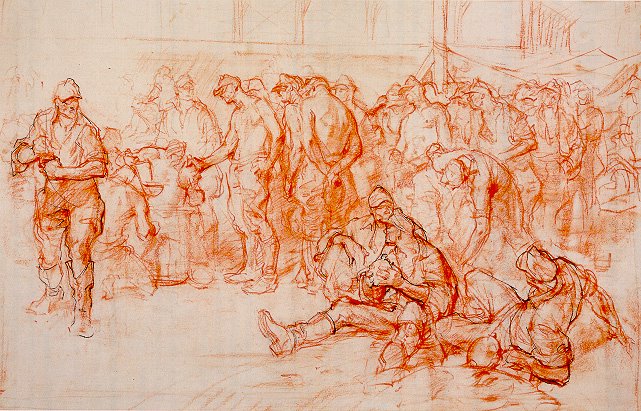
IVOR HELE: THE GREAT WAR ILLUSTRATOR


The best war illustrator you've never heard of is Ivor Hele (1912-1993) who depicted searing images of combat and military life in World War II and the Korean War.


As an official war artist for the Australian government, Hele spent a year at the frontlines in the North African campaign from 1941-42.


Hele then traveled to the South Pacific island of New Guinea where he drew and painted the fierce combat between the Australians and the Japanese in dark and difficult jungle terrain.


He returned to Australia physically and emotionally exhausted and began a prolific period in his career. After a year, he returned to New Guineau where he worked in the trenches with the troops until he was injured. Hele lay unconscious for two days. He was transported to a hospital in Australia where, after a long convalesence, he resumed working. At the height of the Korean War, Hele spent five months in the mud and the cold of Korea, brilliantly recording the struggles of the Australian soldiers in their trenches.


After the war, Hele illustrated a few books, magazines and calendars, but he was mostly kept busy with commissions to illustrate great battles of the second world war. Almost 500 of his paintings and drawings are housed at the Australian War Memorial.

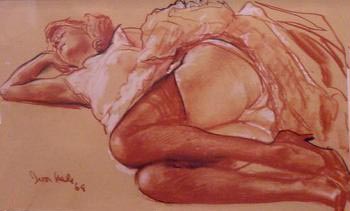
The most striking thing about Ivor Hele was that, after traveling the globe and devoting his life to recording every form of savagery that humans can wreak upon each other, he finally reached his saturation level of death and despair and retreated to an isolated cottage on a remote Australian beach. There he lived the life of a hermit, drawing and painting intimate pictures of his wife.


Other artists have found their muse in a particular woman and shut themselves off from the rest of the world--Gaston Lachaise and Bonnard to name just two. But in my view, Hele was far more poetic and tragic. A scorched human being, he stumbled out of the embrace of thanatos (death) and sought refuge in the arms of eros. His private drawings of his wife from this period are both graphic and lovely. One imagines that these sensitive studies of the human form were the best possible therapy for regaining his humanity.

Obscene Art #2: For Christ' Sex - Sarah Lucas

Chicken Knickers (1997)
"I was quite a tomboy when I was growing up, I liked hanging out with a lot of boys, and I sort of got used to their way of talking about sex. And at the same time as thinking it was funny, I suppose I was a bit aware that it also applied to
me, and I've always had those two attitudes."
We Do it With Love
"I don't think I have a problem with having more than one view about it at once."


The Stinker (2003)

Got a Salmon on (Prawn) (1994)
Recently you could buy it at Artangel for under 20 000€...


The Kiss (2003)

"I first started smoking when I was nine. And I first started trying to make something out of cigarettes because I like to use relevant kind of materials. I've got these cigarettes around so why not use them. There is this obsessive activity of me sticking all these cigarettes on the sculptures, and obsessive activity could be viewed as a form of masturbation."

Christ You Know it Ain't Easy (2003)
(link to anarticle about the exhibition here)


Beer Can Penis (1999)

Friday, December 2, 2005

Obscene Art #1: Cutting off the penis

The Polish events, which just keep getting worse and worse, are an inspiration to write about body art and every possible controversial art form I can think of. For now, enjoy some pictures of Paul McCarthy's work:
Here's a free translation of a (fragment of a) recent post about McCarthy's last London show by my friend LunettesRouges:
In a huge abandoned warehouse, models of pirate ships and a few remains of the filming, some heads, arms, swords. This is where Paul McCarthy and his son Damon spent a month filming pirate scenes that are now projected on two sets of screens. It is grotesque, hilarious, carnavalesque, obscene, unsettling, funny, terrifying, violent, perverted, orgiastic, gore, gargantuan. The music is obsessive, deafening. The actors scream, shout, laugh, fight. It's Hollywood and Disney gone amok, perverted, parodied. The pirates attack a village, they kill, rape, torture the prisonners (Abu Ghraib, of course), they sell the girls at auctions. The blood is naturally ketchup, the cut off members are naturally made of plastic, and nothing is done to hide the cameramen or the dummies.

It's a deformed reality, a repulsive attraction, and, if you don't leave disgusted after five minutes, it's a mind-twisting experience.
(all this off-site from the Whitechapel Gallery)

And here's an article from the Guardian, in case you want to know more about the man.
Oh, and since it's the right season. Here's a holiday picture, courtesy the very special mind of Paul McCarthy:
"I am not interested in art being a cure-all." - Paul McCarthy

More: